What Is a Strategy Focus in Guided Reading?

Guided Reading in THE Classroom: Strategies for Success
Few skills can benefit a child more than throughout their life than the ability to read. It is a skill of such singular importance that it plays a function in nigh aspects of everyday classroom learning.
However, unfortunately for a skill of such importance, it isn't always possible to find the time for 1:1 reading with every student every twenty-four hours during the busy schoolhouse schedule. It is this problem that guided reading is designed to accost.
What is Guided Reading?
Guided reading is a grouping method of teaching reading skills that tin exist used in place of, though usually in addition to, occasional ane:1 reading and discrete phonics instruction.
Generally speaking, guided reading involves teaching groups of children co-ordinate to their ability levels. The exact number in each group will depend on the number of children in the class, also as how well they practice in a baseline reading assessment.
Normally, there are nearly five groups in the average class, though these groups may be uneven in size and can be updated at various intervals throughout the year according to individual rates of progress as reflected in reading assessments.
In essence, guided reading is all almost educational activity to the various needs of the levelled groups in the classroom. It endeavours to instruct the students in a range of reading strategies that can be later practical independently to any new book the student encounters.
Understanding Reading Levels
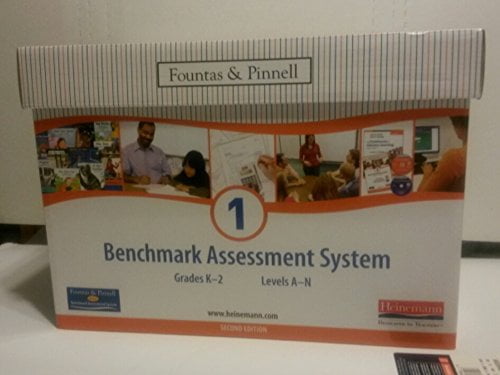
Benchmark Assessment System 1, second Edition By Fountas & Pinell Purchase on Amazon
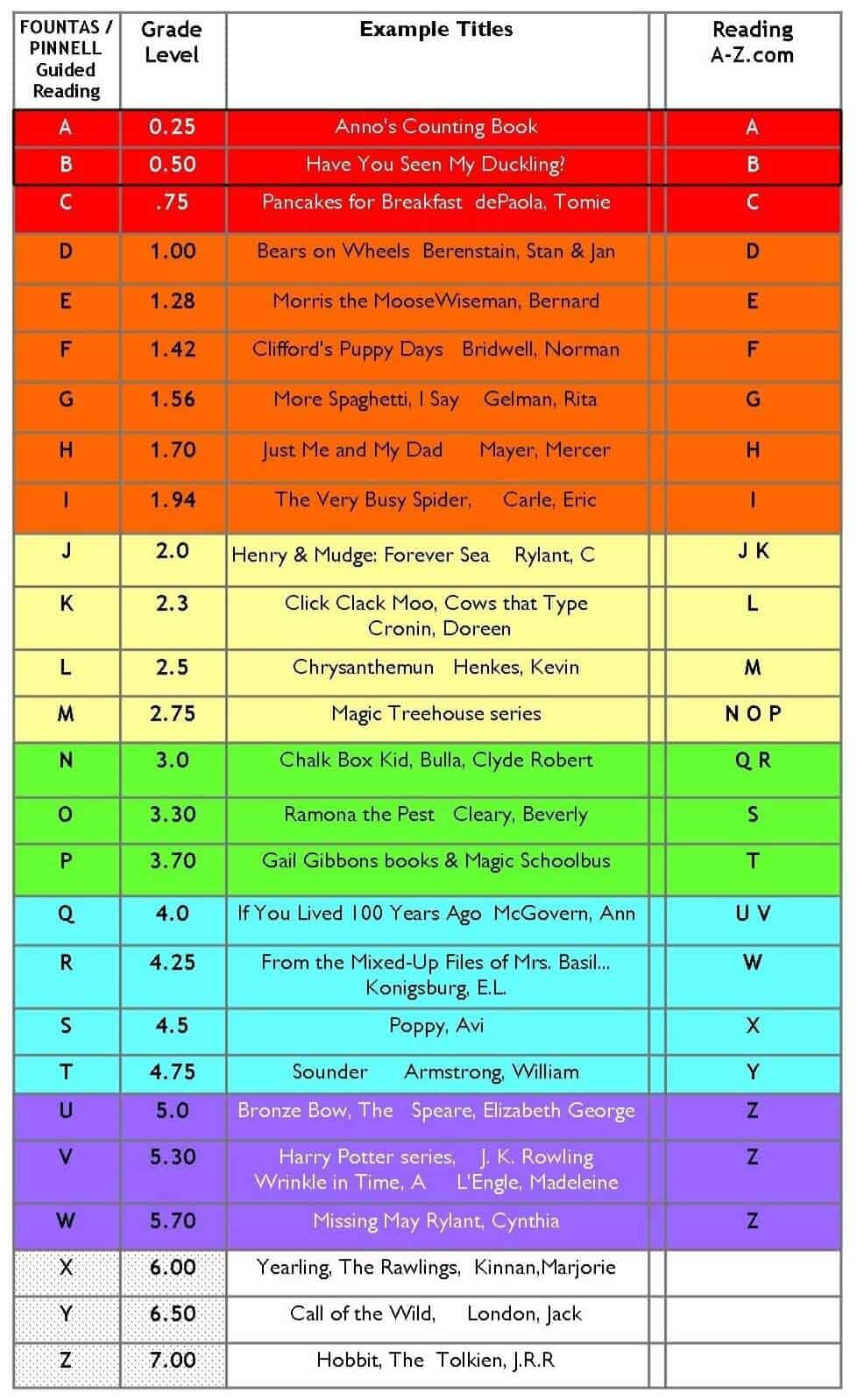
This tin vary slightly depending on the region in which you teach only the about unremarkably used method of guided reading assessment used is the alphabetical system developed by Fountas, and Pinnell in the 1990s.
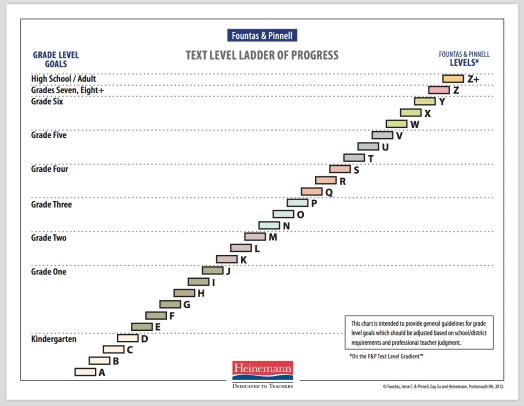
The levels range alphabetically from A to Z, with level A representing the lowest level and level Z the highest. This allows the teacher to work closely with each student to assist them get better readers by introducing increasingly challenging books while meeting the varying instructional needs of each kid in the room.
It would be expected that every bit a kid progresses from kindergarten to the end of year two they would progress through all 26 levels.
Without an agreement of a students level, guided reading lacks any assessable growth.
Nearly every primary and unproblematic school will have a copy of a benchmark assessment organization like to what you can run across hither, and so track it down and ensure you are familiar with it particularly if yous work in the junior levels.
GUIDED READING LEVEL Chart
READING ACTIVITIES FOR ANY TEXT

This massive collection of ☀️READING ACTIVITIES☀️ covers all essential reading skills for elementary/chief students. NO PREP REQUIRED! works with all text and media types. Thousands of teachers take adopted this as a GO TO RESOURCE for independent and grouping tasks.
- 60+ activities requiring students toWRITEin a range of genres and styles based on their text
- 40+ activities incorporating Artistic and Creative skills about their book.
- 30+ TECHNOLOGY based activities, including 20 open-concluded iPad and spider web based tasks
- 25+ Grouping based tasks
- xx+ tasks requiring RESEARCH, Enquiry and EXPLORATION of concepts within a text.
- fifty+ tasks you tin can use with FILMS, GRAPHIC NOVELS and DIGITAL LITERACIES.
- fifteen+ activities involving DRAMA, MUSIC and Role PLAYING
- 15+ GRAPHIC ORGANIZERS that can be applied to whatsoever text
How is Guided Reading Organized?
To implement guided reading successfully, multiple copies of graded readers will be needed. You volition as well need to appraise each student's reading abilities to enable you to group them according to their specific ability.
For our elementary-aged (or master-aged) students, reading should exist a daily activity. Given the size of the average class, guided reading is ofttimes the main method employed to teach reading.
If there are five guided reading ability groups in the classroom, the teacher tin await to read with each group approximately every other solar day, for a minimum of twice per week. This is usually washed on a rota footing.
While the teacher reads with a group, the other groups tin can be engaged in other reading activities suitable for their level. These activities may include phonics work, sequencing activities, comprehension tasks, language games etc.
If there is a teaching assistant in the classroom, they can either back up the children in completing these supplementary activities, or have the lead in a guided reading session also.
The Guided Reading Expanse

Implementing guided reading successfully in the classroom requires considerable arrangement. To make the nigh of the allotted time in the classroom it can be very helpful to dedicate a specific area to the practice.
Some things y'all may wish to place in your guided reading area may include:
● Tables, chairs
● Posters/prompts of various reading strategies
● Listening area for audio versions of books
● Multiple copies of graded readers
● Book boxes
● Computers
● Mini whiteboards and markers
● Pencils, paper, Mail-It notes etc
If classroom ornament is an area of interest to you exist sure to check out this great article which explores great means to raise reading corners.
GUIDED READING ACTIVITIES & STRATEGIES
As nosotros take stated in the introduction, the chief aim of guided reading is to instruct the students in the apply of reading strategies that will eventually enable them to confidently and competently read any book past themselves.
We can grouping our strategies into three useful categories:
- Prediction – What exercise yous think volition happen next?
- Clarification & Questioning – Which parts of book did you lot find difficult? What questions practise you accept nearly these?
- Summarizing – What is this book well-nigh? What happens?
1. Prediction
Prediction encourages students to describe on their own prior learning and experiences to permit them to make educated guesses on what may follow in the story.
Prediction activities are keen activities to hone your students' predictive abilities and comprehension skills, and they can be repeated often. They besides have the added advantage of requiring very piddling preparation by the teacher.
Prior to beginning to read the chosen volume, some pre-reading work is necessary to focus the students' minds on the task at hand.
Typically, this work will begin with an examination of the following elements of the book:
● Title – What is the title of the volume? What does the title reveal about the book?
● Blurb – What information does the blurb reveal? What expectations does it create?
● Writer – Who is the writer? What is the author's purpose in writing this volume?
● Illustrator – Who is the illustrator? What clues do the illustrations give you nigh this text?
● Cover – What does the cover make you think about? What expectations are created?
● Genre – What type of text is this? Is it fiction or nonfiction? How practise you know? What are our expectations of this genre in terms of discipline and format?
While prediction begins with the mostly pre-reading activities outlined above, at that place volition be ample opportunities for the student reader to make farther predictions throughout the reading of the book too. For example, it is good do to ask the students, or encourage them to ask themselves, prediction type questions at the cease of a paragraph, department, or chapter.
Working on using prediction strategies in guided reading encourages the student to read closely for inferences and other clues that volition signal the journey the text may take. Information technology also encourages the educatee to pay close attending to the content of the text as they read. This kind of holistic approach to reading improves overall comprehension of a text.
Prediction Graphic Organizer Activity
Provide the students with a T-Chart worksheet entitled 'My Predictions'. The chart should consist of ii columns; 1 headed My Prediction and the other Why I Think This. Provide a space to record the student's name and the championship of the text at the tiptop of the sheet.
At any point during the reading of the text, y'all can instruct the students to stop and retrieve about where this story is going. Students tin can tape their predictions on their sheet, equally well as the reasons for thinking this.
This activity can serve well as a supplementary reading activity on days when the group is non scheduled to read with the grade teacher.
2. Clarification and Questioning
In terms of guided reading, clarification refers to first identifying the hard parts of the text, before making sense of them through a variety of description techniques.
These techniques tin be as simple as looking up a word in a dictionary. There are other tools available to students, even so. Frequently, when students wait upwards the meaning of a word in a dictionary it helps clarify the significant of that part of the text in the short term, but sometimes the word'south definition is non retained for the next fourth dimension the student comes across information technology.
Sometimes information technology is better for the student to use other techniques to piece of work out the meaning, such as employing contextual clues.
A COMPLETE DIGITAL READING Unit FOR STUDENTS
Over 30 engaging activities for students to complete BEFORE, DURING and AFTER reading Any BOOK
- Compatible with all devices and digital platforms including GOOGLE CLASSROOM.
- Fun, Engaging, Open-Ended Contained tasks.
Clarification and Question Prompts
Drills employing sentence starters are a great way to effectively train our students to clarify and question and to help internalise these strategies. Begin with the clarification prompts to help students identify the areas of the text they are unsure of, earlier moving to the question prompts to help them begin to work out the meaning and significance within the text.
Clarification Prompts:
● This role is difficult because…
● I didn't understand when…
● I plant it difficult to work out the part where…
● I don't know what this means where it says…
When the students have identified the vocabulary, phrases, sentences, paragraphs, and sections that are giving them trouble, they tin can and so move on to forming questions using the following question prompts:
Question Prompts:
● Who…
● What…
● Where…
● When…
● Why…
● How…
These prompts help students to identify more closely the source of their defoliation when reading a text and to learn to ask for assistance. In the process of receiving an answer to their questions, they begin to broaden their understanding of a range of techniques they can later utilize in independent reading to clarify the pregnant of a text for themselves.
In the context of guided reading, information technology tin can exist helpful for students to piece of work together to form the questions to ask their instructor.
Rather than directly answering the questions for the group, nonetheless, teachers would exercise well to encourage the students to work towards finding the answers for themselves, every bit this not just helps cognition retention but improves their reading independence.
3. Summarizing READING
Summarizing is an important skill for students to develop. It helps students to identify the most important parts of a text or story and to learn to ignore irrelevant details and data besides. Students who practice summarizing learn to integrate the details and the main ideas of a text in a meaningful way. Summarization is useful for fiction and nonfiction genres alike.
A uncomplicated way to encourage your students to summarize a story is to ask them to paraphrase it in their own words. Equally it will be highly unlikely they will have memorized the entire story word for word, paraphrasing the story will allow you to assess their overall understanding of what they take read.
Comment and Summarize
To encourage your students to summarize a text, ask them to answer the post-obit iv things:
● What are the master ideas in the piece?
● What are the about important details or points made?
● What details or information is irrelevant or unnecessary?
● What are the keywords and phrases in the text?
If they have photocopies of the story, y'all may wish to take them underline or highlight the information related to the to a higher place questions in different colors and then ask them to retell the story in their ain words after they accept washed this. Encourage them to apply the keywords and phrases used in the text in their retelling too.
Become Guiding
Getting guided reading started in the classroom requires lots of planning and organisation at the beginning of the year, simply this initial investment of fourth dimension and effort reaps rich rewards for students that is reflected in their rapid progress.
In one case clear procedures and routines are established, your students volition become more than adept at applying the broad range of strategies to a wide range of text types. This volition go a long mode to producing the confident and capable readers any instructor would be proud of. Now, become guiding!
VIDEO TUTORIALS on teaching guided reading
OTHER Groovy GUIDED READING ACTIVITIES
Meridian 7 Reading Comprehension Strategies for Students and Teachers
Essential Reading Comprehension Strategies for students and teachers Learning to read is a complex skill that demands a lot from our students. Once students accept moved on from the relatively easy process of decoding the words on the folio and are able to read with a level of fluency and automaticity, increasing demands are made…
Identifying the main thought of the story: A Guide for Students and Teachers
READING FOR MEANING: IDENTIFYING THE MAIN IDEA OF THE STORY Nosotros have all been in that location, though it tin often feel as futile as the search for that proverbial needle in a haystack… Finding the primary idea of a piece of writing can be a challenge, but it is an essential reading comprehension skill for our…

Sequencing events in reading and writing
WHAT IS SEQUENCING? A DEFINITION. Sequencing is an essential reading skill that students must develop if they are to fully empathize all reading material. Luckily, sequencing comes naturally to well-nigh children equally the concept of chronological order is reinforced from very early on through the do of the routines of daily life. From the very…
Instruction Cause and Effect in Reading and Writing
What is Cause and Effect? Developing an agreement of how cause and effect inform the system of a text enhances a student's ability to fully cover what they have read. But, what exactly do we hateful when nosotros speak of cause and effect in relation to reading? Crusade is the driving force in the text….

thirteen Fun Reading Activities for Any Volume
No matter whether you walk into a classroom in Asia, Due north America or Europe y'all volition almost certainly come across teachers and students building their understanding of the world through a dedicated daily reading session packed full of great reading activities. Books allow students an opportunity to be informed, entertained or escape as they comprehend fiction…
Graphic Organizers for Writing and Reading
Huge collection of digital graphic organizers for writing and reading: Digital and Printable graphic organizers and templates for teachers and students. Reading and writing templates and teacher organizers.
The Perfect Digital Reading Diary for your Students
Explore the benefits of creating digital reading diaries to track and record student reading at dwelling house and in school. Never collect a reading diary again by using this excellent digital assessment tool for students, parents and teachers.

Tips for Managing Guided Reading with Large Course Sizes
This list was compiled past Christine Fankell, Elementary Literacy Facilitator, Livonia Public Schools, MI Create a guided reading grouping meeting schedule. Vary the frequency that yous plan to meet with each group. Meet more ofttimes with struggling readers and less oft with proficient readers. Apply a timer to go along your guided reading lessons to 20…

Teaching Phonics: A Complete Guide for Parents and Teachers
An Introduction to Phonics and learning to read Throughout this commodity, I aim to provide you lot with a clear understanding of teaching phonics finer in the classroom and offer a multifariousness of strategies and proven ideas to teach phonics. WHAT IS PHONICS? A DEFINITION FOR TEACHERS AND PARENTS. Phonics can be divers equally a body…
Content for this page has been written by Shane Mac Donnchaidh. A quondam principal of an international school and university English lecturer with fifteen years of didactics and assistants experience. Shane's latest Volume the Complete Guide to Nonfiction Writing tin can be found here. Editing and support for this commodity take been provided by the literacyideas team.
penningtonwone1961.blogspot.com
Source: https://literacyideas.com/how-to-teach-guided-reading/
0 Response to "What Is a Strategy Focus in Guided Reading?"
إرسال تعليق